
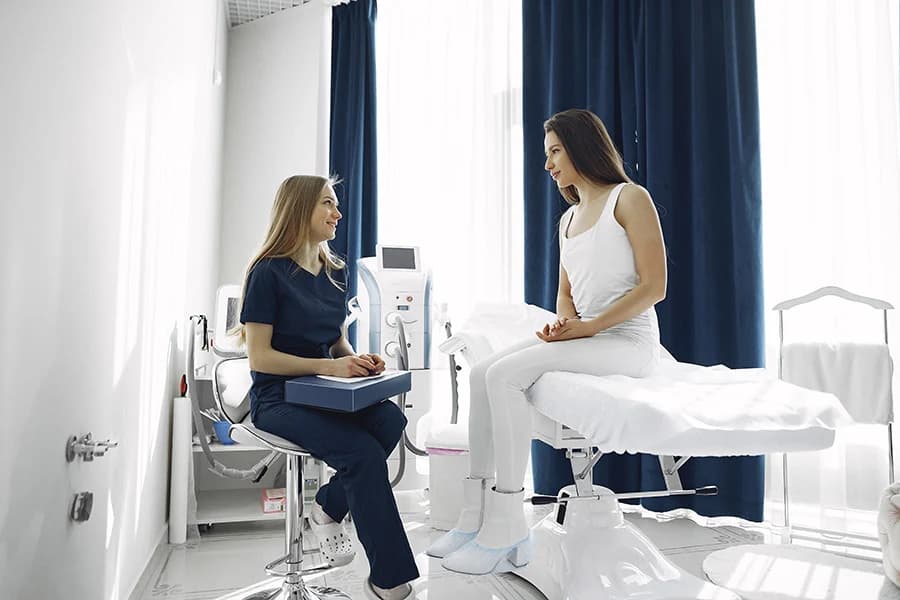
Before treatment: agree what you are measuring
Define the question you want a later review to answer. Is it a specific contour, a small area of fullness or how a particular item of clothing sits? A goal that is clear at the start makes a follow-up more useful than an undefined expectation of looking better.
Ask what baseline information the practitioner will record and how it will be compared. If photographs are appropriate, discuss consistent views and secure storage. Record the agreed area and the intended review point; do not rely on remembering an informal conversation after you leave.
Early recovery: appearance is not a verdict
Pain, tenderness and swelling were reported in the small published inner-knee Aqualyx study. That observation supports discussing a recovery period; it does not establish how long swelling will last for you or what a Leeds body-area result should look like on a particular day.
Use your own written aftercare instructions to understand expected recovery and when to seek help. Do not judge success by how swollen an area becomes, and do not dismiss a concerning change because someone online said it happened to them too. If symptoms need attention, clinical review comes before photographic comparison.
Evidence: Mlosek et al. (2020) — ultrasound-guided injection lipolysis of inner-knee fat
At review: compare like with like
A useful review asks several questions together: has recovery progressed as expected, has the original concern changed, are you satisfied with the change and is any further treatment justified? A single measurement or selected photograph should not replace that wider assessment.
Try to avoid changing the comparison halfway through. Different poses, clothing or camera angles can obscure the question you set at the beginning. Tell the practitioner if there have been other changes since the first appointment so that any conclusion is properly qualified.
After review: waiting or stopping can be valid decisions
A second appointment should not automatically become a second treatment. The practitioner should explain whether it is appropriate to wait, reconsider the plan, discuss an alternative or stop. Ask what new information supports the next step rather than assuming that a preselected number of sessions must always be completed.
Research protocols use defined intervals, but they differ by study and product. An older timetable should not be copied into your care without checking the actual instructions and clinical circumstances. This website therefore does not publish a countdown to a final result or an automatic repeat-treatment schedule.
If you are planning around an event
Mention a holiday, wedding, work commitment or sports event before deciding. Ask how recovery uncertainty affects your plans and whether postponing treatment would be simpler. A fixed event date is not a reason to compress a clinically appropriate schedule.
Give yourself room to consider the advice. NHS guidance recommends time to decide and cautions against pressure from time-limited cosmetic offers. Our booking route is there when you are ready; it is not a guarantee that treatment or a desired appearance will be achieved by your chosen date.
Your questions, answered
Will I see my final result in seven days?
This website makes no seven-day or other fixed results guarantee. Ask for an individual recovery and review plan based on the actual proposed treatment.
Does swelling mean the treatment has worked better?
Swelling is not a reliable measure of cosmetic success. Follow aftercare and use the agreed clinical review to assess progress.
When should I book the next session?
After the practitioner has assessed whether another treatment is appropriate and confirmed the applicable interval. Do not use a generic online schedule as your personal plan.
Sources & editorial review
VIVO Body Studio editorial team. Updated 26 October 2026. VIVO’s owner confirms review by the Leeds practitioner. This is an owner-reported review, not an independent clinical certification. Published evidence and individual treatment advice are distinguished below.
- Mlosek et al. (2020) — ultrasound-guided injection lipolysis of inner-knee fat ↗
Small study of seven women, at a different anatomical site. Historical research, not the current Leeds protocol; no study photographs or outcome percentages reproduced.
- NHS — Is a cosmetic procedure right for me? ↗
General decision support, not an endorsement of Aqualyx or VIVO.