
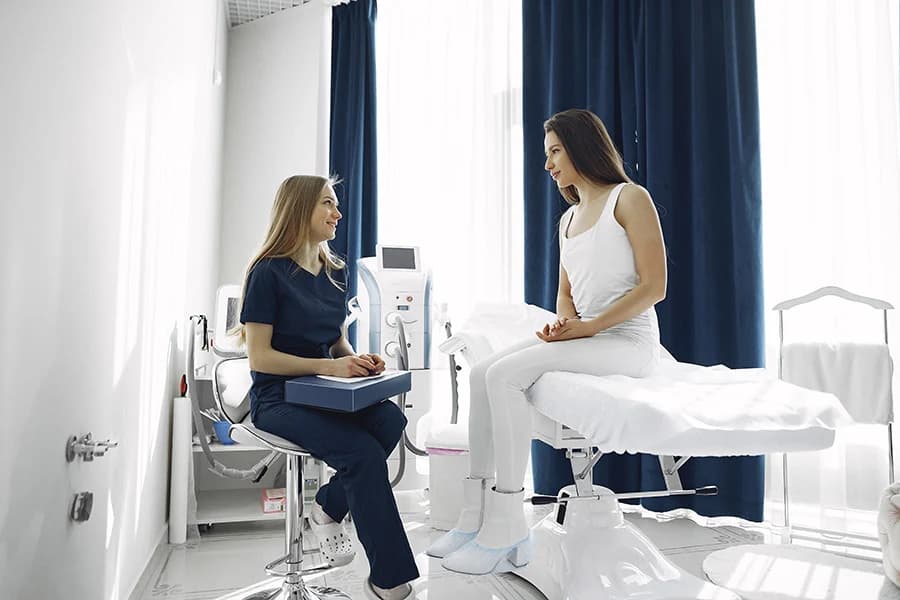
An appointment is a decision point
The approved Fresha link opens the Leeds Aqualyx Body service. Choosing that appointment does not establish that you need a course or that a particular area is suitable. The consultation comes first, followed by a clear explanation of any proposed treatment and time to decide.
Ask the practitioner to distinguish three things: the appointment you are booking now, any follow-up to review recovery and a further procedure that may or may not be recommended. Those are different commitments, and they should not be blurred by a package label.
What would justify another session?
The explanation should connect the next step to your original concern and the assessment. Ask what the first treatment is intended to achieve, what information will be gathered at review and what would make further treatment worthwhile. A larger number is not inherently a better plan.
It is equally useful to ask what would lead the practitioner to stop. Examples of decision points to discuss include whether the agreed goal has been reached, whether recovery needs further assessment, whether the response is disappointing and whether another option should be considered. These are questions for your clinician, not a self-treatment algorithm.
Research schedules are not a prescription
The published inner-knee study used two treatments separated by approximately a month. That is a description of a small research protocol, not a recommendation for your abdomen, arms, flanks, thighs or back. That research schedule is not a personal treatment recommendation.
If you encounter a standard course online, ask which product, area and evidence it relates to. The fact that a clinic offers several sessions does not establish that every person should receive the same number or that an interval can safely be shortened for convenience.
Evidence: Mlosek et al. (2020) — ultrasound-guided injection lipolysis of inner-knee fat
What a useful written plan should make clear
Ask for enough detail to make the commitment understandable in ordinary language. You should be able to explain the proposed area, what happens next and what is still conditional without translating clinical shorthand or guessing what a package includes.
- The concern being assessed and the proposed treatment area, including whether one or both sides are included.
- The purpose of the first session and the review that determines the next step.
- The expected recovery discussion, contact route and circumstances requiring reassessment.
- The total cost of the agreed commitment, any optional later cost and the rules if the plan changes.
Understand the whole commitment, not a multiplied headline
The confirmed starting treatment price is £99. Multiplying that price by a guessed number of visits does not produce a verified course quote. No whole-course price or guaranteed course saving is confirmed. Complimentary Supersonic and RF components are separate from a course price and remain subject to individual suitability. The practitioner may defer or omit a component.
The £30 deposit counts towards treatment, leaving £69 where the agreed treatment price is £99. Read the prices and cancellation pages for the applicable terms. If a course is proposed, ask how deposits, refunds and changes apply to that specific agreement before paying.
Take time if you need it. Booking a first appointment should give you better information, not force you into a course before the clinical decision has been made.
Your questions, answered
Is one session enough?
It may or may not address an individual's agreed goal. No universal result or Leeds session count is verified; the practitioner must explain the proposed plan and review it.
Can I buy a discounted course now?
No course price or discount is approved for display here. Any future package must have confirmed clinical suitability, scope, pricing and terms.
Do I have to continue if I change my mind?
You can decline a procedure. Ask about the applicable cancellation and payment terms before committing; no unverified financial entitlement is implied by this clinical guide.
Sources & editorial review
VIVO Body Studio editorial team. Updated 26 October 2026. VIVO’s owner confirms review by the Leeds practitioner. This is an owner-reported review, not an independent clinical certification. Published evidence and individual treatment advice are distinguished below.
- Mlosek et al. (2020) — ultrasound-guided injection lipolysis of inner-knee fat ↗
Small study of seven women, at a different anatomical site. Historical research, not the current Leeds protocol; no study photographs or outcome percentages reproduced.